

30 Journal Prompts for Self-Reflection: Build a More Mindful, Intentional Life
Take a few minutes each day to reconnect with yourself, gain clarity, and create a life that feels more intentional.
Introduction
Life moves fast. Between work, family, social media, and endless to-do lists, it’s easy to spend days on autopilot without checking in with yourself.
That’s where journaling can make a real difference.
You don’t have to be a great writer or fill pages every day. Simply answering one thoughtful question can help you understand your emotions, celebrate your progress, and identify what truly matters.
Whether you’re starting a new chapter, feeling stuck, or simply looking to become more mindful, these journal prompts are designed to help you slow down and reflect.
Grab your favorite notebook, pour yourself a cup of coffee or tea, and let’s begin.
Why Self-Reflection Matters
Taking time to reflect allows you to:
- Understand your thoughts and emotions
- Reduce stress and mental clutter
- Build confidence and self-awareness
- Set meaningful goals
- Practice gratitude
- Recognize unhealthy habits and limiting beliefs
- Celebrate personal growth
Even spending 10 minutes a few times each week can help you feel more grounded and intentional.
30 Journal Prompts for Self-Reflection
1. What are three things I’m grateful for today?
2. What made me genuinely smile this week?
3. What is something I’ve overcome that I’m proud of?
4. What currently brings me the most peace?
5. What has been taking up too much of my mental energy lately?
6. If fear wasn’t holding me back, what would I do next?
7. What does my ideal day look like?
Describe everything—from the moment you wake up until bedtime.
8. Which relationships make me feel supported and valued?
9. What habits are helping me become the person I want to be?
10. What habits are no longer serving me?
11. When do I feel most confident?
12. What am I avoiding right now?
13. What does success mean to me?
Not society’s definition—your own.
14. What’s one lesson I learned recently?
15. How do I usually respond to stress?
16. What is one thing I need to forgive myself for?
17. What boundaries would improve my life?
18. What motivates me every morning?
19. What am I currently learning about myself?
20. If I could give my younger self one piece of advice, what would it be?
21. What are five things that make me feel calm?
22. What dream have I been putting off?
23. Which accomplishments do I rarely give myself credit for?
24. What would my happiest future self thank me for doing today?
25. What negative thought do I need to let go of?
26. What does self-care truly look like for me?
27. Which moments this month made me feel the happiest?
28. What kind of person do I want to become over the next year?
29. What is one small step I can take tomorrow toward my goals?
30. What do I want to remember about this season of my life?
📌 Save These Journal Prompts for Later
Don’t have time to journal right now? Save this list to Pinterest so you can come back to it anytime.
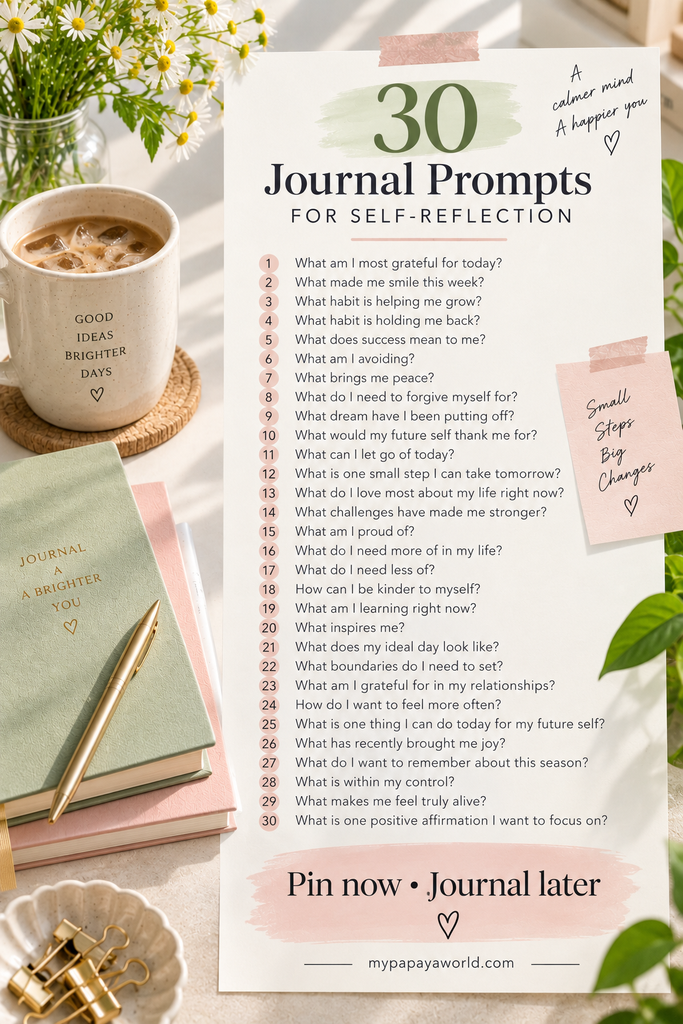
Love this list? Save it to Pinterest so you’ll always have journaling inspiration whenever you need it.
Tips for Building a Consistent Journaling Habit
If you’re new to journaling, don’t worry about writing pages every day. Consistency matters far more than length.
Here are a few simple tips:
- Keep your journal somewhere you’ll see it.
- Write for just 5–10 minutes.
- Choose one prompt each day.
- Don’t worry about grammar or perfect sentences.
- Be honest—your journal is for you.
- Revisit old entries every few months to see how you’ve grown.
My Favorite Journaling Essentials
Having a few beautiful supplies can make journaling feel like something you look forward to instead of another task on your to-do list.
Here are a few essentials worth considering:
🌿 A Guided Journal
A guided journal is perfect if you’re unsure what to write each day. Many include thoughtful prompts, gratitude exercises, and goal-setting pages that make getting started much easier.
📖 A High-Quality Hardcover Notebook
A sturdy notebook with thick pages makes journaling more enjoyable and can become a keepsake you’ll treasure for years.
🖊️ Smooth Writing Pens
The right pen really does make a difference. A smooth gel or fine-tip pen can turn journaling into a relaxing ritual.
🕯️ A Calming Candle
Lighting a candle before you write creates a peaceful atmosphere and signals to your mind that it’s time to slow down.
☕ Your Favorite Mug
A warm cup of coffee, tea, or hot chocolate pairs perfectly with a quiet journaling session.
⏲️ A Simple Timer
Setting a timer for just 10 minutes helps eliminate pressure and makes it easier to build a consistent habit.
Frequently Asked Questions
How often should I journal?
There’s no perfect schedule. Even writing two or three times a week can help improve self-awareness and reduce stress.
What if I don’t know what to write?
That’s exactly why journal prompts are so helpful. Simply choose one question and start writing whatever comes to mind.
Is journaling good for mental health?
Many people find journaling helps them process emotions, reduce stress, and gain clarity. While it isn’t a replacement for professional mental health care, it can be a valuable self-care practice.
How long should I journal each day?
Aim for 5–15 minutes. The goal isn’t to write a novel—it’s to spend intentional time reflecting.
Final Thoughts
Self-reflection doesn’t require hours of free time or the perfect words.
Sometimes, all it takes is one meaningful question and a quiet moment with yourself.
Choose one prompt today, write honestly, and remember that personal growth happens through small, consistent steps. Months from now, you’ll be able to look back at your journal and see just how far you’ve come.
Happy journaling!
Disclosure: This article contains affiliate links. As an Amazon Associate, we earn from qualifying purchases at no additional cost to you. This helps support our website and allows us to continue creating helpful home décor content. Portions of this article were created with the assistance of AI and have been reviewed and edited for accuracy and readability.